
Nobody decided who makes the morning chai. Who does?
Many homes run on rules nobody said out loud, like who makes the morning chai. Tonight, name one such rule aloud and take over tomorrow's chai.
- autopilot
- hermes
- couple-habits
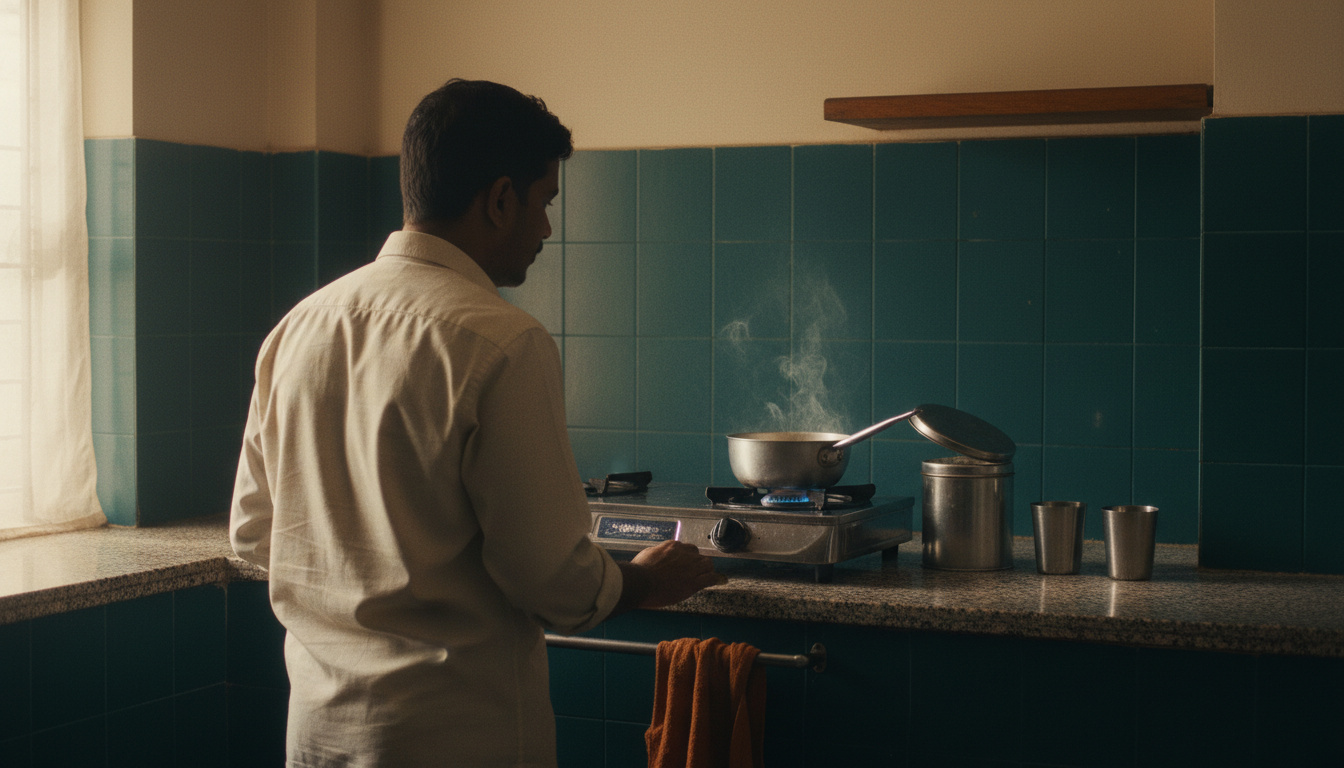
The chai is on the counter at half past six. Every morning. Nobody asked for it and nobody said thank you for it last week.
Then one morning it is not there. She is still asleep. He stands in the kitchen and opens three tins before he finds the tea leaves. When she wakes, he asks, half joking, "Chai kahan hai?"
She looks at him and says, "Yeh meri duty kab bani?"
He has no answer. Neither of them ever decided it. It just happened, one morning at a time, until it became the way the house works.
This note is about the rules in a home that nobody said out loud, how to find one, and a calm way to put it into words.
Why an unspoken rule feels like no rule at all
A rule that was never spoken does not feel like a rule. It feels like the weather. The person who benefits from it may not see it, because nothing ever asks them to. The person who carries it may not question it either, because it started small and has been there ever since.
Chai is only the easy example. The same thing can sit under who remembers the school forms, who notices the gas cylinder is nearly empty, who knows when the in-laws are visiting, and who calls the plumber.
Nobody in this scene is the villain. Nobody chose the rule, so nobody can be blamed for it. That is exactly why it is worth saying out loud: it can be changed without a fight.
What the research says, and what it does not
The sociologist Allison Daminger interviewed 35 couples in the United States and published her findings in 2019. She looked at the thinking work behind running a home: noticing what needs doing, keeping track of it, and deciding what to do.
In those interviews, the noticing and the keeping track fell more to the women, while the deciding was closer to shared between partners.
This was a small interview study of American couples, not a survey of Indian homes, so it cannot tell us how any one household works. It also describes what the interviews showed, and not what causes it. What it does give us is a reasonable question to ask at home: which jobs in our house does one of us notice, without it ever being agreed?
How to find a rule nobody said
Take one ordinary day and write down, without judging, what happened before anyone asked. Who put the water on. Who knew there was no milk. Who remembered the electricity bill.
Then look for the jobs where the answer is always the same person. A job that is always done by one person, and never discussed, is often an unspoken rule.
You are not looking for who is at fault. You are only looking for jobs that nobody ever chose.
One thing to try tonight
Pick one such rule. The morning chai is a good one if it fits your home. Tonight, after dinner or over the last cup of the day, say it plainly and without a complaint in your voice:
"Subah ki chai hamesha tum banati ho. Yeh humne kab tay kiya tha? Kal main banaunga."
Then make tomorrow's chai yourself.
Here is what to expect from the first try. Saying it may feel awkward, even a little staged, and it can go quiet for a moment afterwards. Let it. Your chai may also come out worse than hers. Make it anyway, and do not ask for credit.
Afterwards, notice two things. How did it feel to say a rule out loud that had never been spoken? And is there another job in the house that deserves the same question?
When this is not the right kind of help
If asking about who does what in your home is met with anger, punishment or fear, or if one person controls how the house is run, a conversation about chai is not the answer. This is relationship education, not therapy or medical advice. If any part of this describes what is happening in your relationship, a qualified professional or a local support service is the right next step, and not an article.
A question to carry into the week
Each Sunday: one question to ask your partner, the research behind it, and one thing to try. The free Relationship Checkup is open to everyone, any time. Take the Relationship Checkup
One question a week.
Each Sunday: one question to ask your partner, the research behind it, and one thing to try. The free Relationship Checkup is open to everyone, any time.