
He took a love language quiz for her. She wanted sleep.
A quiz said her love language is gifts, so he bought earrings on the day she wanted sleep. Tonight, skip the quiz and ask her one question.
- autopilot
- hermes
- relationship-psychology
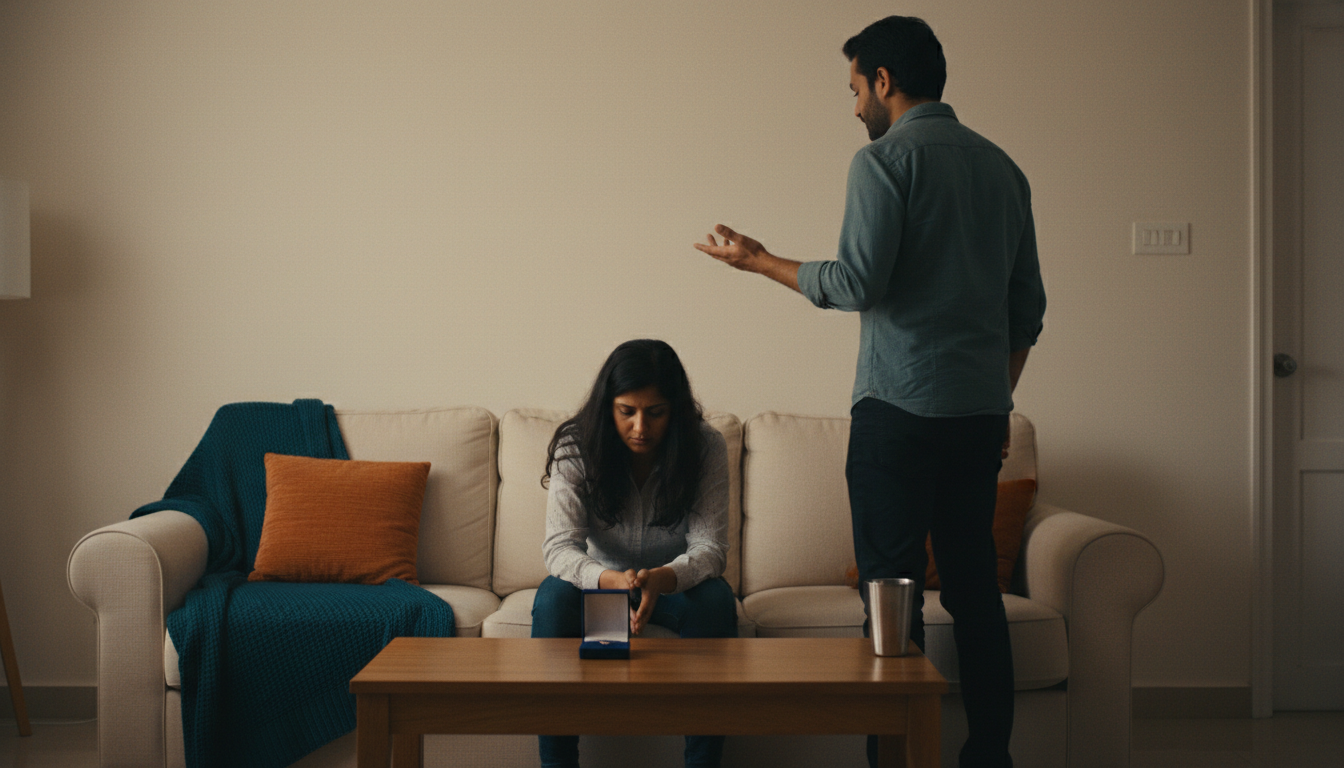
He filled in an online quiz at lunch, answering for her. The result said her love language is gifts. By evening he is home with a small box of jhumke, pleased with himself.
She has been up since five with a sick child. She says thank you, puts the box on the table and says, "Mujhse pooch lete." You could have asked me.
He is not careless. He is trying. That is why this stings both of them.
Where the idea came from
The idea of love languages comes from a 1992 book by Gary Chapman, a marriage counsellor. He described five ways people give and receive love: words, time, gifts, help and touch. He drew the idea from his own counselling work. That makes it anecdote, one counsellor's reading of the couples he met, and not a tested finding.
That does not make it silly. A counsellor who sits with couples for years may well notice something real. It means the claim needs checking before anyone builds a marriage on it, or a birthday gift.
What the tests found
Researchers have checked it. In a published study of couples, researchers asked whether partners whose love languages matched were more satisfied than partners whose did not. The match did not go together with higher satisfaction.
More recently, relationship scientists reviewed the research on love languages in a journal article. They found little support for two central claims: that each person has one main language, and that a match between partners goes with a happier relationship. The same review reported that people value all five kinds of care. The evidence here is still limited, and a handful of studies cannot settle it for every couple.
So the honest reading is this. The five categories are a tidy way to talk about care, and they are not a measured trait you can read off a quiz.
What the quiz gets wrong
The quiz fails in one specific way. It answers a question for her that only she can answer, and it answers it with a label. Once there is a label, the next gift or the next gesture is chosen from the label and not from her face at the door.
Picture the same evening without it. He comes home, sees how tired she is, and takes the child for an hour. Nobody needed a category for that. He only needed to look, or to ask.
What to keep anyway
The idea gets one thing right. People do feel cared for in different ways, and the way changes with the week. On a week with a sick child, care might be an hour of sleep. On another week it might be a walk after dinner, or you taking over the school forms, or a call to the electricity office that has been waiting for a month.
That is not a language. It is a Tuesday. The only reliable way to learn it is to ask, and to keep asking, because it moves. A quiz taken once at lunch cannot follow a week.
One thing to try
Tonight, after dinner, skip the quiz. Sit down and ask your partner one question:
"This week, what could I do that would make you feel I am with you?"
Then say nothing for ten seconds. Let the silence run. Do not offer suggestions to fill it, and do not defend the earrings.
The first time will feel stiff, a little like a form being filled in. That discomfort passes with practice, and it is a fair price for an answer you did not have to guess.
After the answer, notice two things. Is it smaller than you expected? Is it something you could do this week? If it is, do that, and do only that. Do not add a bonus gesture on top to prove you listened.
If your partner says they do not know, that is also an answer. Say you will ask again on Sunday, and do.
A note on limits
This is relationship education, not therapy or medical advice. If any part of this describes what is happening in your relationship, a qualified professional or a local support service is the right next step, and not an article.
Your next step
Each Sunday: one question to ask your partner, the research behind it, and one thing to try. The free Relationship Checkup is open to everyone, any time. Take the Relationship Checkup
One question a week.
Each Sunday: one question to ask your partner, the research behind it, and one thing to try. The free Relationship Checkup is open to everyone, any time.