
The theory of constraints: the wedding buffet that waited for plates
The theory of constraints says a whole system moves only as fast as its one slowest step, tried here on a wedding buffet where the queue waits on a single tub of plates.
- work
- autopilot
- hermes
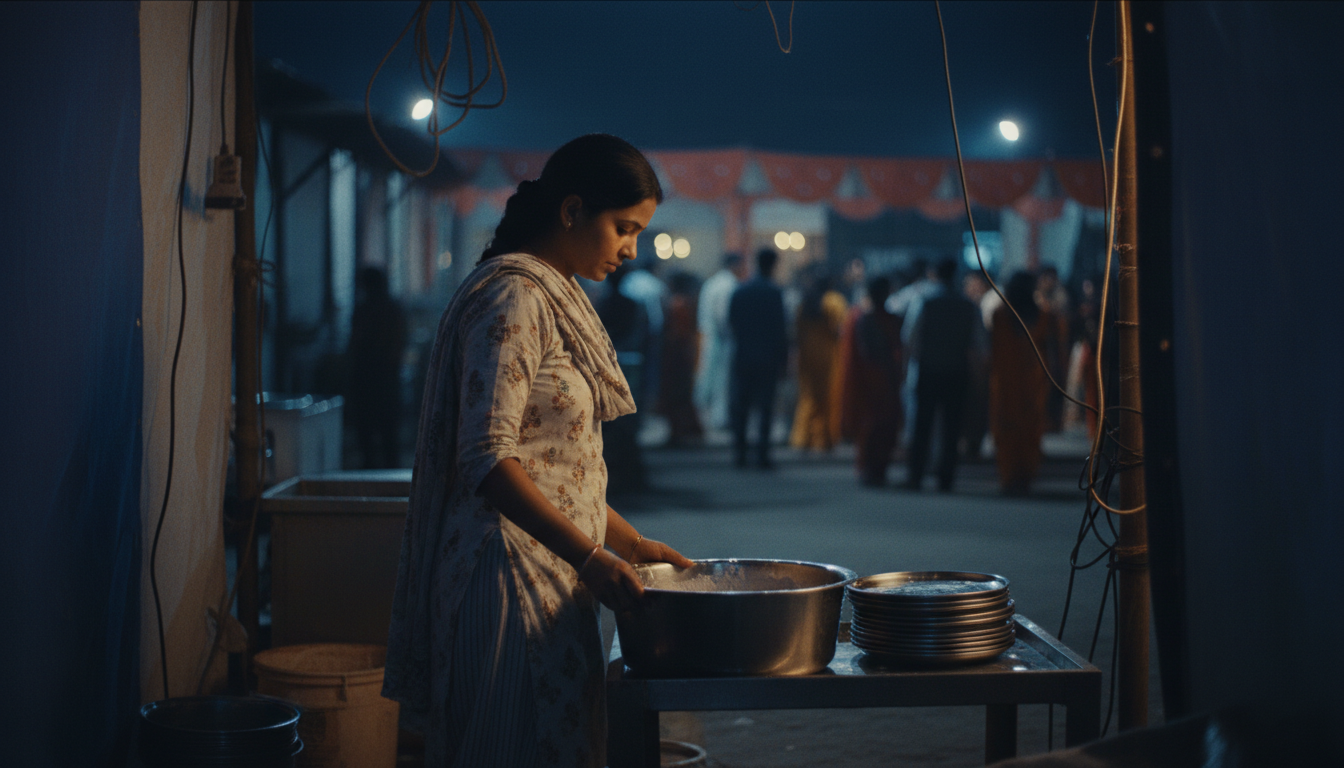
The wedding dinner in Nagpur is ready on time. Twelve dishes sit in steel containers, four counters are open, and the queue still reaches the gate.
Meenal, a cousin of the bride, goes to look. The guests are not waiting for food. They are waiting for plates. One boy is washing them in one tub behind the tent, and every guest at the counter has to wait for a clean one.
Her uncle is already scolding the caterer. "Add two more dishes, make it look generous." But nothing about the dishes was slow.
What the model is
The theory of constraints says that any process, a buffet, a kitchen, an office, moves only as fast as its slowest step. That step is called the constraint. Improving any other step does not make the whole thing faster, because the work just piles up in front of the constraint. The idea comes from Eliyahu Goldratt, who explained it in his business novel The Goal.
The example, step by step
Meenal asks one question: where does the line stop moving? Not where is everyone busy, but where does everything wait.
The cooks are not the answer, because the food is ready. The counters are not the answer, because they stand half-empty, waiting for guests who have no plate. The tub is the answer. One tub, one boy, a handful of plates at a time.
So extra dishes would change nothing. A fifth counter would change nothing. She asks the caterer for a second tub and a second helper, and for the stack of steel plates from the other hall to be brought across. Within a few minutes the plates arrive faster than the guests take them, and the line starts to move.
Notice what she did not do. She did not ask the boy to work faster. He was already working hard. The constraint was the step, not the person standing at it.
Where it goes wrong
There are three traps. First, blaming the person at the slow step. That usually only makes them slower and the rest of the team quieter.
Second, picking the wrong step. A step that looks slow is not always the constraint. The test is whether the work piles up in front of it and the steps after it sit idle.
Third, thinking you are done. Once plates are no longer the problem, something else becomes the slowest step, perhaps the dessert counter. The constraint moves, and you look for it again.
This works the same in an office. A file waits three days for one signature while ten people finish their parts on time. Making those ten faster does nothing for the file.
One thing to try today
Pick one piece of work you do every week, such as a report, a school admission form or a household task with several people in it. Before tonight, write its steps in a line, and mark the one step where the work waits the longest. Write that step's name on one line. Do not fix it yet. Only name it.
Want more models like this one? /models has a library of them: each Sunday, one mental model and one real decision to try it on.
One model a week.
Each Sunday: one mental model and one real decision to try it on. One click stops it, and the list is never sold or shared.