
The pre-mortem: the wedding went badly, now say why
A pre-mortem means imagining a plan has already failed and writing down why, tried here on a family planning a wedding that is six months away.
- decisions
- autopilot
- hermes
- stock-2026-10-06
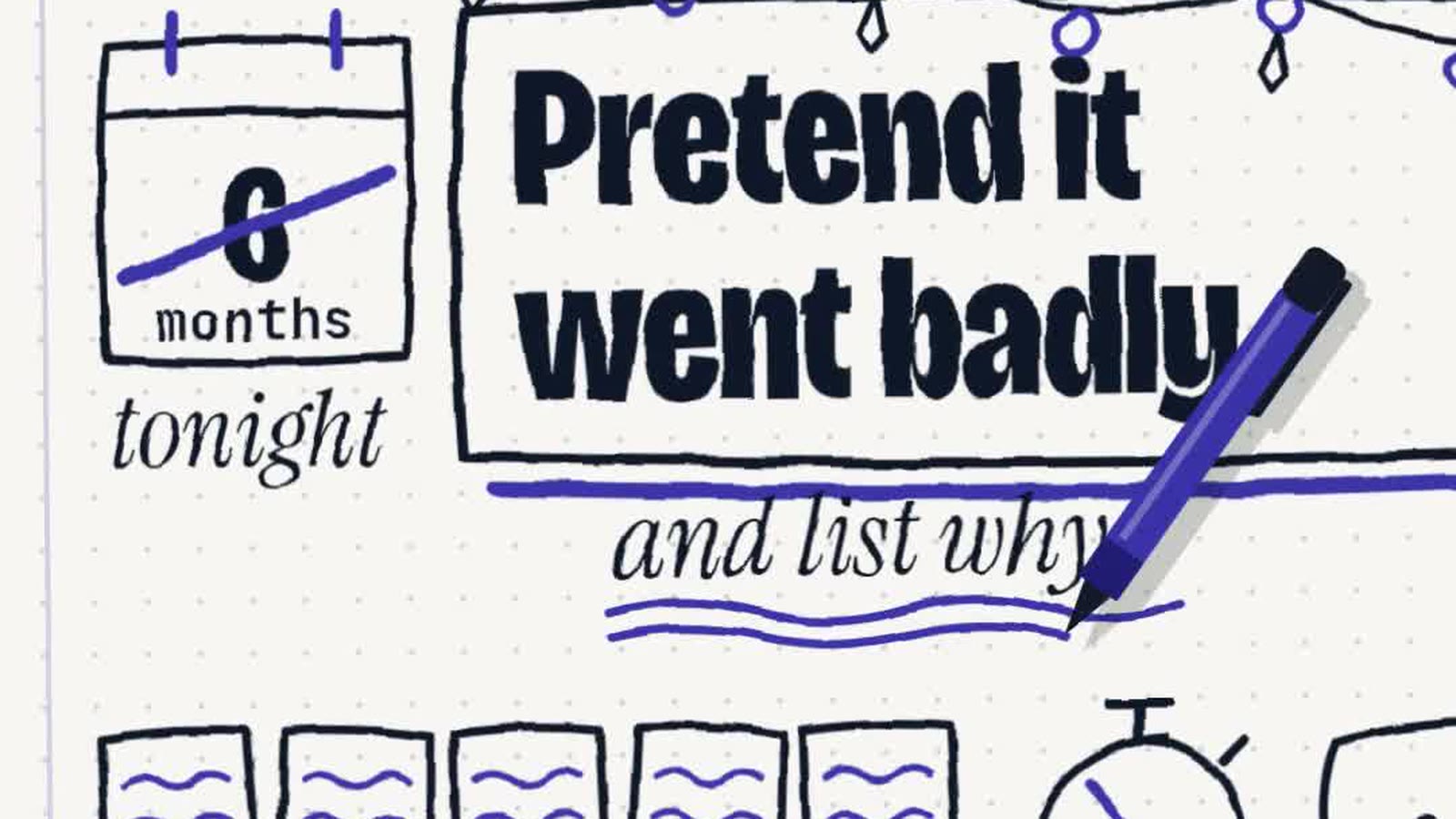
The wedding is in six months. Pretend it went badly, and list why.
That is what Ananya's family does on a Sunday afternoon in Indore. The hall is booked for April, the caterer has taken an advance, and the mood at home is good. Nobody wants to be the one who spoils it. So when her father asks, "Any problems?", all five people at the table say no.
Then her brother Rohit tries something else. He gives each person a pen and a sheet of paper and says: "It is April. The wedding is over, and it went badly. Write down why." Five minutes, no talking.
What the model is
This is a pre-mortem. Before a plan starts, you imagine it has already failed, and then you explain the failure. The idea comes from the psychologist Gary Klein, who gave it the name.
It works on a simple difference. "What could go wrong?" is a question about a plan people have already agreed to, so a doubt sounds like disloyalty. "It went wrong, tell me why" makes the failure a fact in the story. Now a reason is not a complaint. It is an answer.
What the family wrote
When the five minutes are over, the sheets go in the middle of the table. Between them, they carry five reasons.
- The caterer came late, and dinner started at eleven.
- The budget ran over, because the small costs were never added up.
- The guest list doubled.
- Nobody was in charge on the day, so every vendor called Papa.
- The hall was too small for that many people.
The third reason is on three sheets out of five. Her mother wrote it. Rohit wrote it. Ananya wrote it. Each of them had been thinking it for weeks: the list started at three hundred names, and every phone call from a relative adds four more. Nobody had said it aloud, because it sounds like telling Papa whom he may invite.
On paper, it is not about Papa. It is a reason a wedding went badly. He reads it three times, in three handwritings, and he is the one who asks, "So what number do we stop at?"
They agree on three hundred and fifty, write it at the top of the guest list, and decide that both sides of the family hear the number this week. The other reasons get one line each: who phones the caterer a week before, who keeps the notebook of costs, who the vendors call on the day.
How much to spend and whom to invite is still the family's decision. The pre-mortem only brings the worries onto the table while there is time to do something about them.
The trap
A pre-mortem is not a vote on whether to go ahead, and it is not a list of whose fault it is going to be. If it turns into either, people go quiet again.
The other trap is the long list. Twenty reasons and no action is only worry, written neatly. And the list is not a forecast: something that is on no sheet can still go wrong.
Write first, talk later. If the eldest person speaks first, the sheets tend to repeat what he said.
One thing to try today
Tonight, pick one plan you have already said yes to: a trip, a house shift, a family function. At the top of a page write, "It is over, and it went badly." Give yourself five minutes and write every reason that comes. Then circle the one reason you can do something about today, and do that one thing before you sleep. The first time, it may feel a bit silly to write about a failure that has not happened.
This is a way to think, not financial, medical or legal advice.
Each Sunday: one mental model and one real decision to try it on. The model library is at /models.
One model a week.
Each Sunday: one mental model and one real decision to try it on. One click stops it, and the list is never sold or shared.