
Survivorship bias: forty toppers on a hoarding
Survivorship bias is judging a path by the people who made it and never seeing those who did not, tried here on a coaching hoarding and a cousin's startup.
- thinking-traps
- autopilot
- hermes
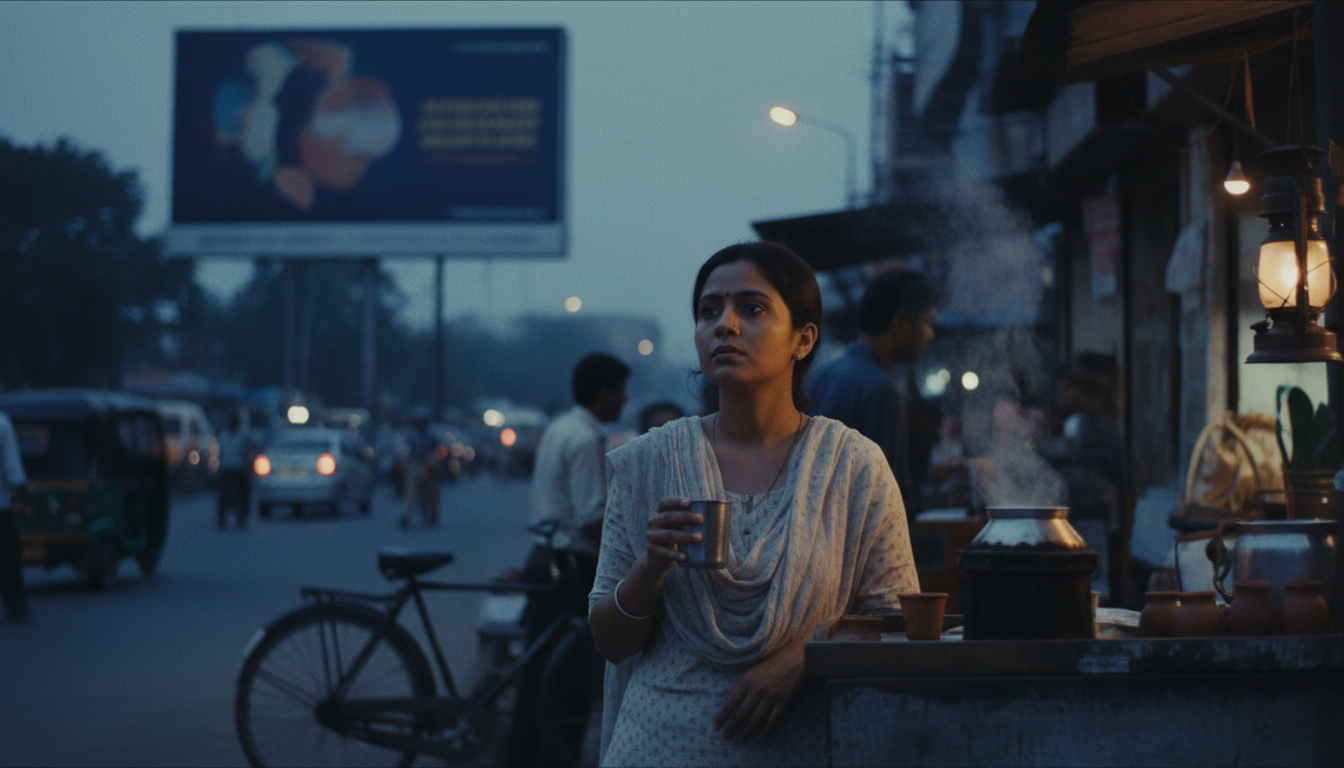
Your father slows the scooter at the traffic signal and points at the coaching centre's hoarding. Forty smiling faces, each with a rank under it. "Dekho," he says. "Sharma ji's son is there too."
You nod. Nobody in the family asks the next question, which is how many children sat in those batches. The hoarding does not say, and it was never going to.
What the model is
Survivorship bias is judging a path only by the people who came out of it successfully, because they are the only ones you can see. The ones who did not make it are quiet, so they leave no trace in the picture.
The idea is linked to the mathematician Abraham Wald. In the Second World War, the story goes, he was asked where to add armour to bombers. The military had looked at the planes that came back, and the holes were mostly in certain places. Wald pointed out that these were the planes that survived being hit there. The places with no holes were the ones to protect, because planes hit there never returned.
The example, step by step
Take Meera, whose family is deciding whether her younger brother Karan should join a coaching centre in Kota after Class 10. The fee is a big stretch for them. The hoarding, the topper stories on WhatsApp and Sharma ji's son all say yes.
Then her cousin Rohit comes up. He left a job, started a food delivery business with two friends, and it worked. At the family function, everyone says Karan should be that brave.
Meera asks two plain questions instead. For the hoarding: how many students joined that batch, and where did the others go? For Rohit: how many friends of his started something similar and shut it quietly, and who talks about them? She does not know the answers yet. She calls the centre and asks for the batch size, and she asks Rohit, kindly, about the friends whose shops closed.
Now the family is looking at the full group, and not only the front row. They may still choose the coaching. The difference is that they choose it knowing the odds are shared by many families, not read off a hoarding.
Where it stops
The model does not say the toppers are lucky or fake, and it does not say hope is foolish. Rohit worked hard, and the toppers earned their ranks. Survivorship bias only says that a winner alone tells you little about your own chances. It can also be overused: if you doubt every success story, you will never try anything. Ask the question, then decide.
One thing to try today
The next time you are shown a winner, in an ad, a family story or a reel, write down one line before tonight: out of how many? Then find one number or one person from the group that did not make it.
This is a way to think, not financial, medical or legal advice.
Each Sunday: one mental model and one real decision to try it on. Find more in /models.
One model a week.
Each Sunday: one mental model and one real decision to try it on. One click stops it, and the list is never sold or shared.