
Reciprocity: the free chai before the sales pitch
Reciprocity is the pull to repay a kindness, tried here on a free chai at a saree showroom that makes walking out empty-handed feel rude.
- people
- autopilot
- hermes
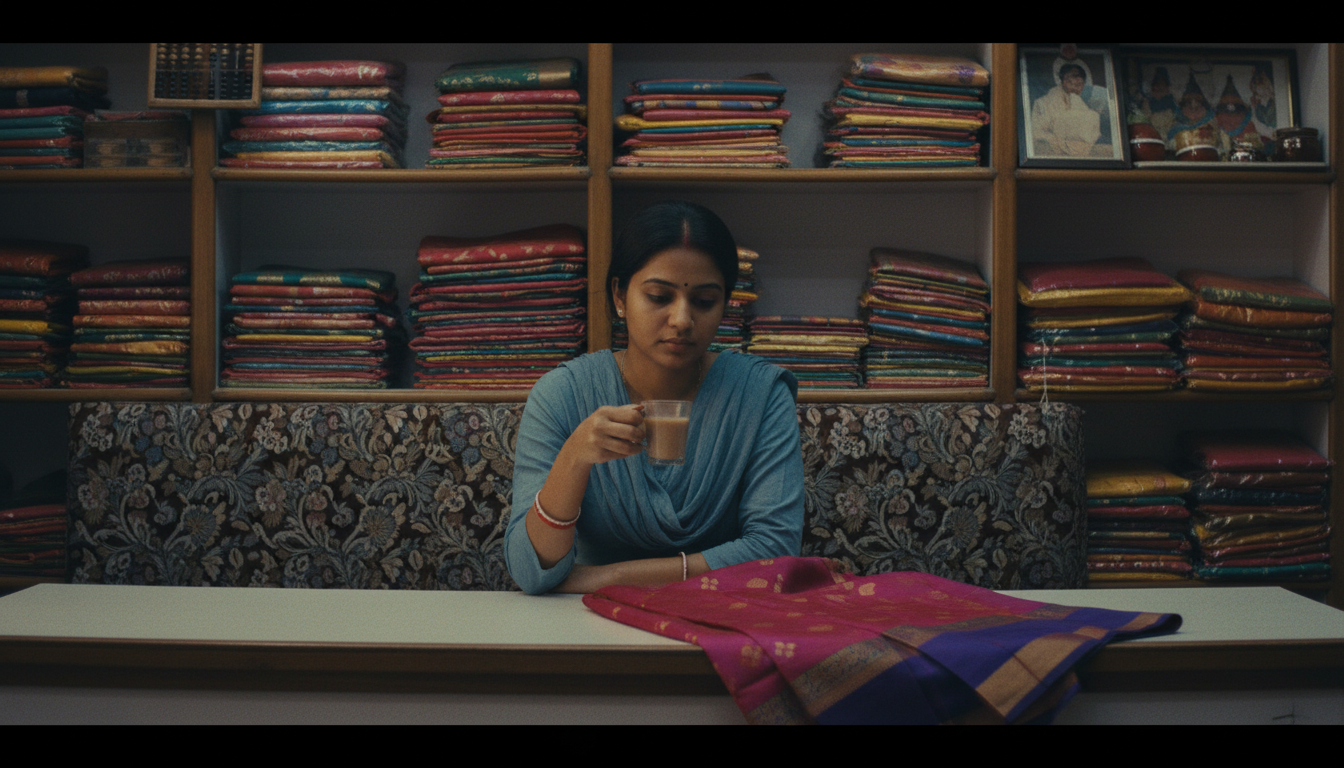
The salesman waves you to the cushioned seat, and a boy brings chai in a small glass. A cold drink follows. Then the first saree is opened, then the tenth. By the thirtieth, nothing is quite right, and still your hand will not pick up your bag. Walking out empty-handed now feels rude.
What the model is
Reciprocity is the pull to repay something you were given. When someone does you a favour, even a small one, a feeling of owing starts up on its own. The psychologist Robert Cialdini wrote about it as one of the ways people are moved to say yes.
The pull is not a flaw. It is part of why neighbours lend sugar and relatives turn up at a function. The trouble starts when a gift you did not ask for sits right next to a decision about money.
A saree, step by step
Meera, 29, is in a Nagpur showroom to buy a saree for her cousin's wedding. Her budget is ₹6,000. By the third hour she is holding a ₹9,500 one and thinking, "It is fine, and he has been so patient."
She tries four small steps.
- Name the feeling. "I feel I owe him." Said plainly, it loses some of its grip.
- Price the gift. The chai was a few rupees of tea, poured before she had said a word about what she wanted.
- Remove it and look again. If the chai had never come, would this saree at ₹9,500 be her choice? It would not.
- Pay the thanks in words. She says, "Thank you for your time. I will check with my aunt and come back."
The kindness is still received. The decision is still hers.
Where the model stops
Not every favour is a hook. The relative who helped with your admission really did help, and your gratitude is real. The model does not ask you to turn cold or to refuse every cup of chai. It only asks you to keep two things apart: saying thanks, and saying yes.
The other way to get it wrong is to grow suspicious of all kindness. That costs you good relationships for no gain. Use the model to notice what is pulling on you, never as a trick to pull on someone else.
One thing to try today
The next time something free arrives just before a decision, whether a cup of chai, a lift or a small favour, say thank you out loud. Then write one line on your phone: "What would I choose if this had not been offered?" Answer it tomorrow morning, and decide then.
This is a way to think, not financial, medical or legal advice.
Each Sunday: one mental model and one real decision to try it on. Find the rest in the library at /models.
One model a week.
Each Sunday: one mental model and one real decision to try it on. One click stops it, and the list is never sold or shared.