
Moral licensing: I was good, so I have earned it
Moral licensing is feeling that one good choice earns you a careless one, tried here on an office samosa after the gym and a mixer after a sale.
- thinking-traps
- autopilot
- hermes
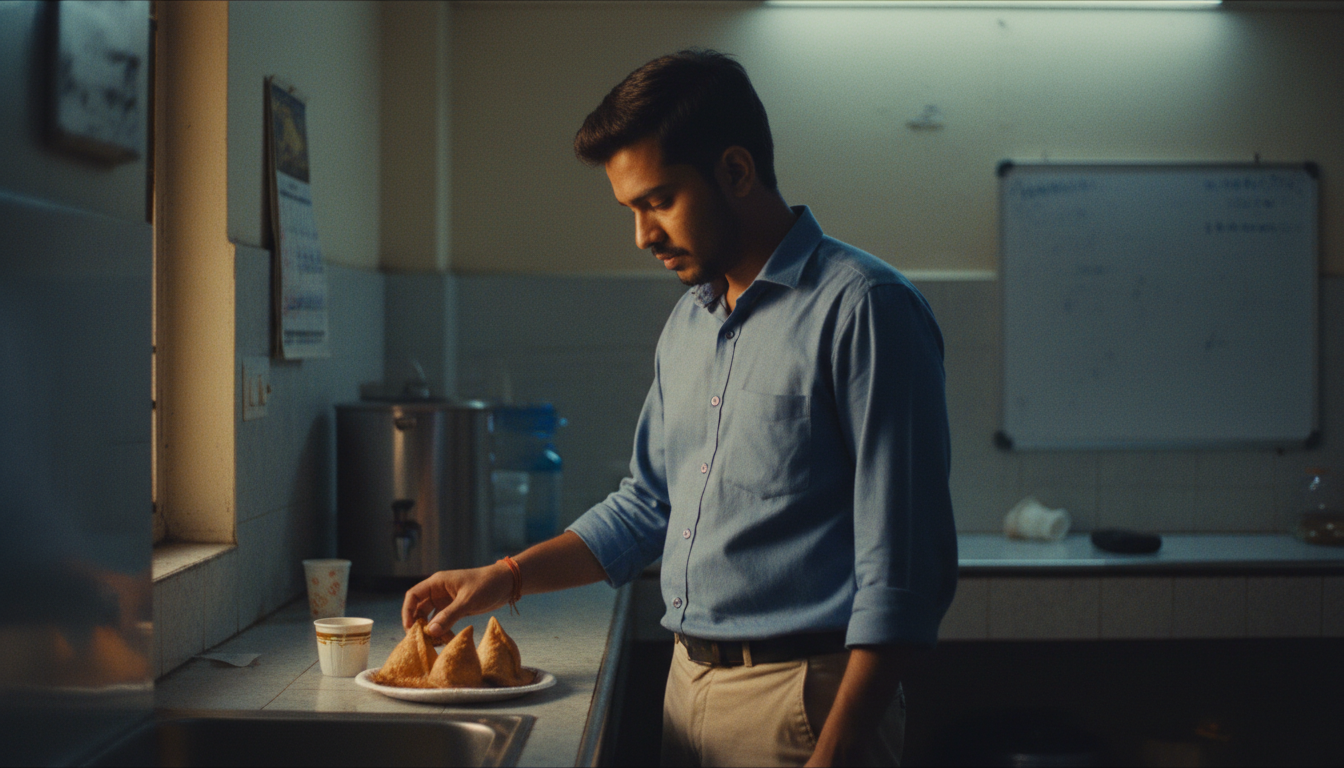
Neha did forty minutes on the treadmill at six this morning. At five in the evening, a plate of samosas reaches her desk in the Pune office. She takes one, then a second, and a small speech runs in her head: I was good today, so I have earned this.
That speech has a name. It is called moral licensing: after you do one sensible thing, it feels like you have collected credit, and the credit feels ready to spend on something less sensible. The idea comes from the psychologists Benoit Monin and Dale Miller, who studied how a good act can make the next careless one feel allowed.
The same bill, twice
Look at Neha's weekend. On Saturday she goes to a festive sale for a fridge. She bargains well and saves 2,000 rupees on the price. Standing at the counter, she sees a mixer for 3,000 rupees. She did not come for it. But she saved 2,000 an hour ago, so the mixer feels like it is only 1,000 away from free.
The gym and the sale look like different stories. They are one story. In both, an earlier good choice is being used as a coupon for a later one.
Here is the step that gets skipped. The 2,000 saved on the fridge is already in her account, and the 3,000 for the mixer is a fresh payment of 3,000. The morning workout is also done, and the samosa is just a samosa on a paper plate. The good deed and the new choice do not touch each other. Neha only feels as if they do.
Where the model stops
Moral licensing does not say that you should punish yourself after a good day. A samosa with colleagues can be a perfectly good choice, and a mixer can be something your kitchen needs. The model does not rule on the samosa or the mixer. It asks only whether the choice stands up without the earlier good deed to defend it.
It can also be misused as a new guilt, where every small treat becomes a trial. That is not the aim. The aim is to notice the speech, and then decide with your eyes open.
One thing to try today
Before the next treat or purchase today, say this to yourself: "If this were the only thing I did today, would I still want it?" If the answer is yes, go ahead and enjoy it. If you notice the answer is only yes because of the morning, wait ten minutes and ask again. Write on your phone what you decided and what the earlier good deed was, so the pattern is easy to see by tonight.
This is a way to think, not financial, medical or legal advice.
Each Sunday: one mental model and one real decision to try it on. See the library at /models.
One model a week.
Each Sunday: one mental model and one real decision to try it on. One click stops it, and the list is never sold or shared.