
The Lindy effect: the paper diary outlives every new app
The Lindy effect is the idea that something that has lasted a long time is likely to last longer, tried here on five to-do apps against a father's paper diary.
- learning
- autopilot
- hermes
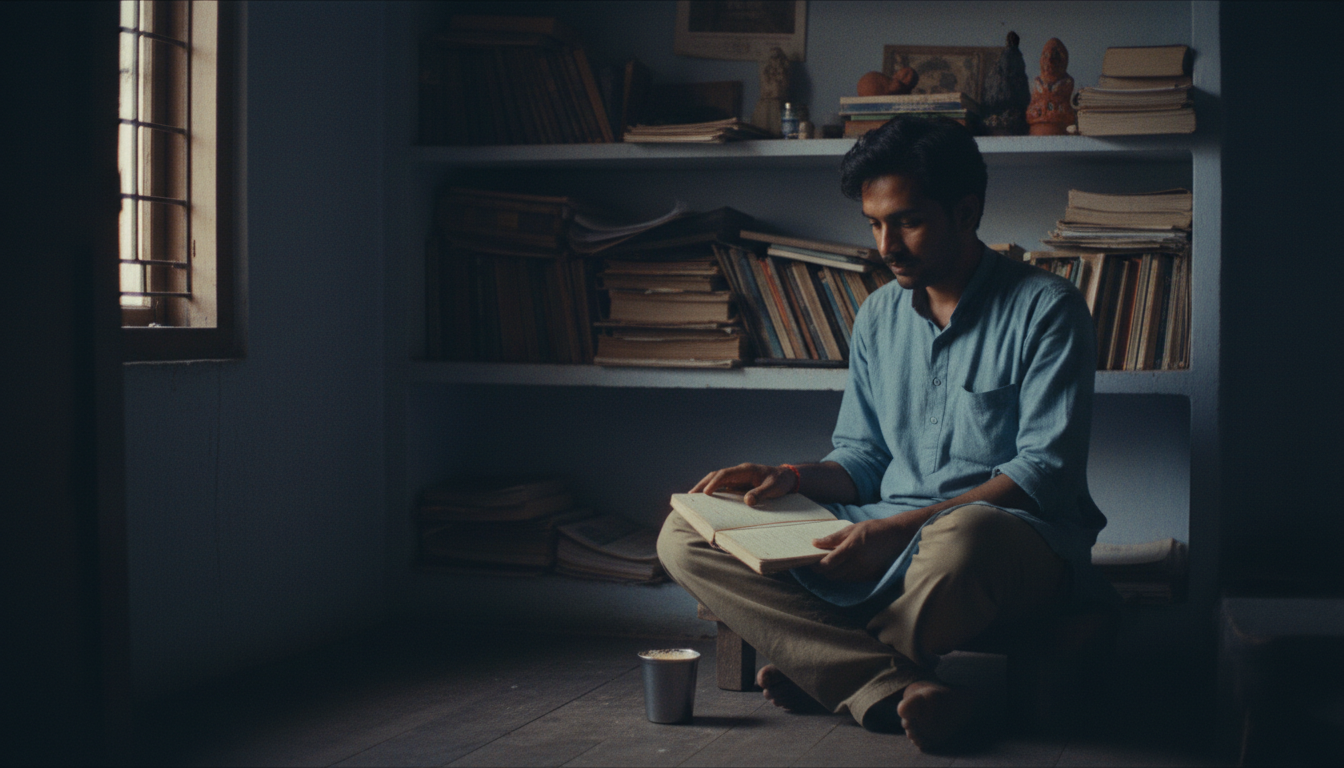
Last month you moved your to-do list to a new app. It was the fifth in five years. Each one had a nicer colour, a cleaner screen and a promise that this time you would keep up with it. Meanwhile, papa's diary sits on the shelf with a rubber band around it. It holds the doodhwala's account, every phone number and every birthday, and it has been in use since 1998. It has never asked for an update.
What the model says
The Lindy effect is a simple rule of thumb: for things that do not age like living bodies do, such as ideas, tools, books and habits, every extra year of survival is a small sign that the thing may survive more years. A book that has been read for fifty years may be read for another fifty. An app launched last spring has told you almost nothing yet.
The name is often credited to Albert Goldman, and Nassim Nicholas Taleb and Benoit Mandelbrot developed it further.
The example, step by step
Meera, a 29-year-old accountant in Nagpur, is about to move her tasks to a sixth app, because a colleague likes it. Before she downloads it, she writes two lines on a sheet of paper.
First: how long has my current way worked? Her notebook method has lasted four years, and she has dropped it only when she stopped looking at it.
Second: how long has the new app been around? Eight months, and the company has already changed its pricing once.
Nothing here says the new app is bad. It only says that its record is short, so she knows how little she has to go on. Papa's diary, with a record of more than twenty-five years, tells her that the plain thing, a page and a pen, does not break when the phone does.
She decides to try the app for two weeks in parallel, and keep the notebook as the main list until the app has earned the job.
Where it stops
The Lindy effect is a hint, not a proof. Old does not mean good: a habit can survive for years just because nobody questioned it. It also does not fit anything that ages, such as a person, a vehicle or a phone battery. A forty-year-old scooter is not going to last another forty years. And something new can be better; every old thing was new once.
One thing to try today
Before tonight, pick one thing you are thinking of replacing, such as an app, a routine or a way of saving your contacts. Write down how long the old one has worked for you, and how long the new one has existed. Then decide with both numbers in front of you.
If the example is about food or diet, the same question applies: ask how long people have eaten this way, but do not use it to choose a diet or treatment, and speak to a doctor for that.
This is a way to think, not financial, medical or legal advice.
Each Sunday: one mental model and one real decision to try it on. See all of them in /models.
One model a week.
Each Sunday: one mental model and one real decision to try it on. One click stops it, and the list is never sold or shared.