
The Dunning-Kruger effect: three videos and it looks easy
The Dunning-Kruger effect is the gap between how well we think we know a subject and how much there is to know, tried here on a Sunday of share market videos and a father's quiet fixed deposit.
- learning
- autopilot
- hermes
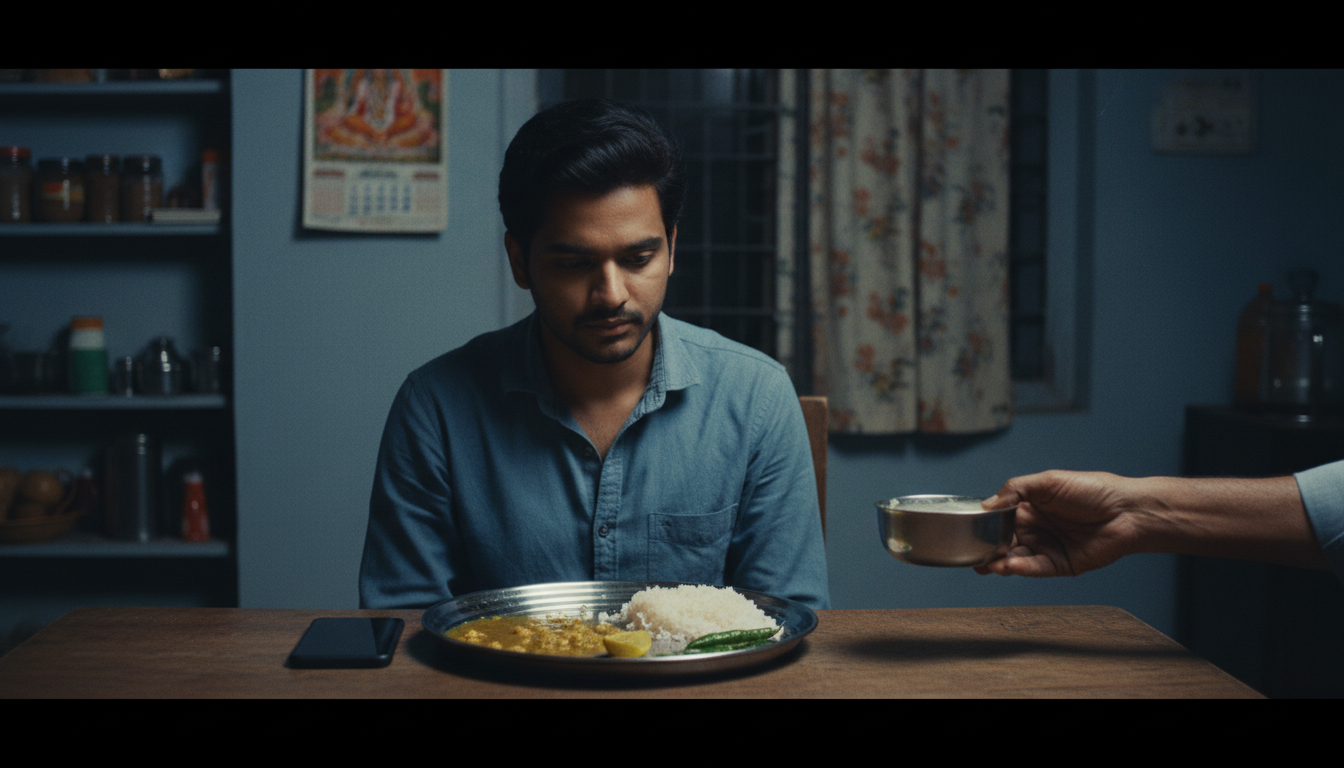
By Sunday evening, Meera has watched three YouTube videos on the share market. By dinner, she is explaining it to her father across the dal.
"See, it is simple. You buy low, you sell high. Why keep money in a fixed deposit for thirty years?"
Her father listens. He passes her the rice. He does not argue. Her phone lies next to her plate, the last video still paused on a man with a green chart behind him.
That quiet is worth a second look.
What the model says
The Dunning-Kruger effect comes from the psychologists David Dunning and Justin Kruger. Their idea is that when you are new to a subject, you cannot yet see how much of it you have not seen. A little knowledge makes the whole field look small, because the hard parts have not shown up yet.
One honest note. The popular chart, with a tall peak of confidence followed by a deep valley, is a later drawing and is not quite what the research showed. The finding is milder than the meme. Use the idea as a reminder, not as a way to label anyone.
The model at dinner
Meera is not foolish. Three videos taught her real words: shares, index, dividend. The words made the market feel familiar, and familiar felt like understood.
So ask the question the model asks: what is in this subject that I have not yet seen?
She tries a short list. How do people decide when a price is too high? What happens to her money if she needs it in a bad month? What did the videos not say about the days things went wrong? She cannot answer any of them yet.
Her father, meanwhile, has watched thirty years of rates, prices and relatives asking for loans. His fixed deposit is boring, and it is also a decision he understood fully. That does not make him right about everything, and it does not make her wrong to be curious. It only means the two of them are standing at different distances from the subject.
Where the model stops
The idea cuts both ways. It includes you and it includes the experts. A person who has studied something for years can also be sure about the corner they know and careless about the next one over. Used badly, the model becomes a stick to hit a beginner with, or a reason never to try anything. Neither is the point.
It also cannot tell you how much you know. It can only prompt you to go and look.
One thing to try today
Before you act on something you just learned, write down three things you would need to know before acting. Not three things you already know. Three gaps. Keep the list short enough to finish in five minutes, and put it next to the decision.
If you cannot think of three, that is useful to notice too.
This is a way to think, not financial, medical or legal advice.
Each Sunday: one mental model and one real decision to try it on. Browse the library at /models.
One model a week.
Each Sunday: one mental model and one real decision to try it on. One click stops it, and the list is never sold or shared.