
The Diderot effect: one new thing asks for more
The Diderot effect is the pull a new purchase has on everything around it, tried here on a Diwali sofa that made the curtains, the wall and the table look old.
- everyday-life
- autopilot
- hermes
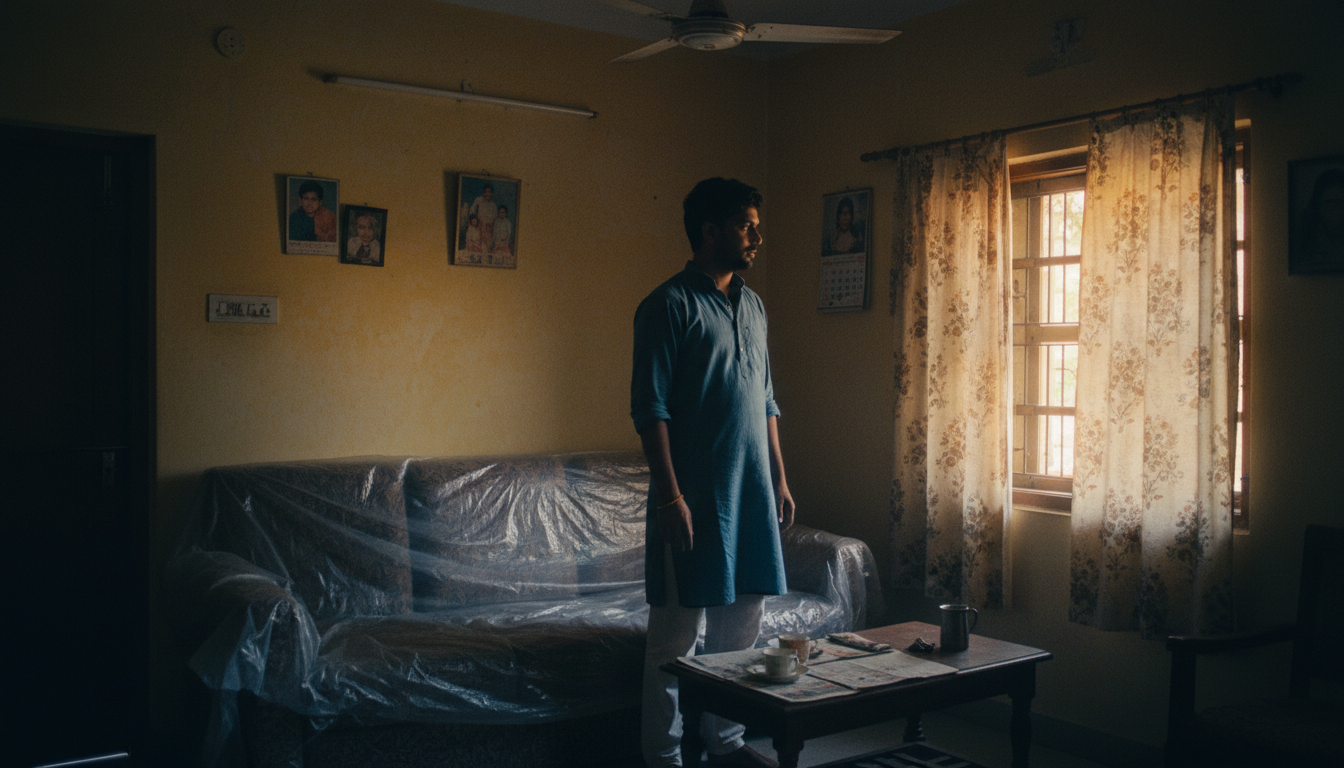
The sofa came home on Tuesday, still in its plastic. By Tuesday night, Kavya was looking at her curtains and thinking they looked tired.
By Thursday it was the wall behind the sofa. By Saturday it was the centre table, with its old water ring, which suddenly seemed to belong to another house. She had not planned to spend on any of these. One new thing had made everything beside it look old.
What the model is
The Diderot effect is the pull a new purchase has on the things around it. Once one thing is new, the old things next to it stop matching, and you start to feel that they need replacing too. It is named after Denis Diderot, the French writer, who described it in an essay about a new dressing gown that made the rest of his furniture look shabby to him.
The point is not that buying is bad. The point is that one purchase can start a chain, and the chain is easy to miss because each step looks small on its own.
One sofa, one list
Kavya lives in a two-bedroom flat in Jaipur. The sofa cost ₹32,000, paid from her Diwali bonus. By Saturday she had a list in her head: new curtains at ₹6,000, paint for the sofa wall at ₹9,000, a new centre table at ₹12,000, and cushion covers at ₹2,500. Added up, that is ₹29,500, almost the price of the sofa again.
On Sunday morning she took a notebook and wrote the four items down. Next to each she asked one question: was this bothering me before the sofa came?
The curtains: no. They had been fine for years, and they only looked tired next to something new. The table: no, it was solid, and the water ring had been there since her sister's visit last year. The wall: yes. She had wanted to repaint it for a long time and had kept putting it off. The cushion covers: yes, the old ones were fraying at the corners.
So she kept two items and dropped two. The sofa had not stopped her from improving the room. It had only stopped her from buying things because they looked old beside it. The decision stayed hers.
Where it stops
This is not a rule against upgrading. Sometimes the old thing really is worn out, and the new one only makes that easier to see. Then replacing it is a fair choice.
The model can also be turned into an excuse to change nothing. The question is not whether you want the next thing. It is whether you wanted it before the first thing arrived.
One thing to try today
Before you buy anything new, write down what else it will make look old. Put each item on its own line and, beside it, write yes or no for "was this bothering me before?" If you bought something this month, do the same list for it tonight, before you spend on its neighbours.
This is a way to think, not financial, medical or legal advice.
Each Sunday: one mental model and one real decision to try it on. Browse the library at /models.
One model a week.
Each Sunday: one mental model and one real decision to try it on. One click stops it, and the list is never sold or shared.