
The availability heuristic: one forwarded video is not a whole city
The availability heuristic is judging how common something is by how easily an example comes to mind, tried here on a family that doubts a daughter's Bengaluru job after one forwarded video.
- thinking-traps
- autopilot
- hermes
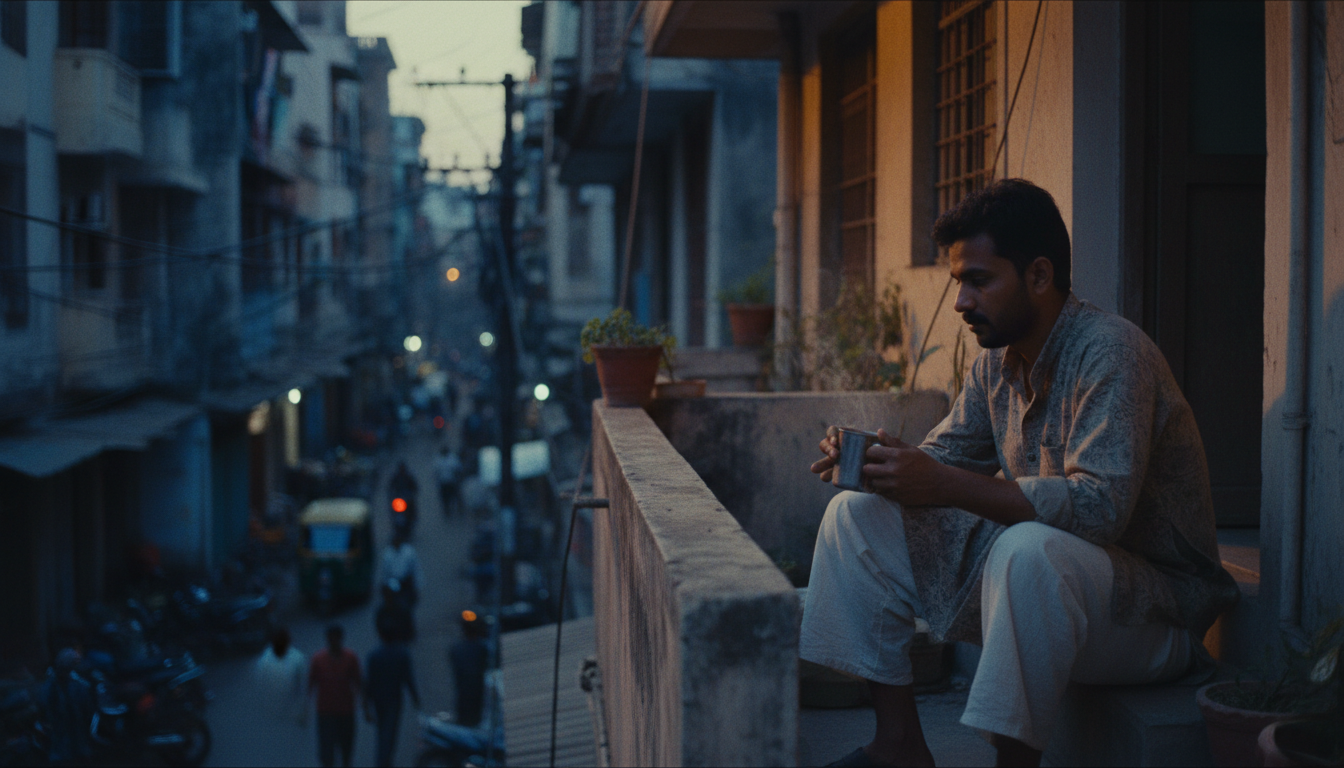
Meera got the offer letter on Tuesday. A software job in Bengaluru, a salary she had hoped for, a joining date in three weeks. Her parents in Nagpur were happy for exactly one evening.
On Wednesday morning, her mausi forwarded a video to the family group. A woman was being followed on a dark road, somewhere in a city. The caption said "Bengaluru is not safe anymore." By lunch, her father had stopped talking about the joining date and started talking about the PG. By evening, someone said maybe she should look for a job closer to home.
Nobody in that house was being unkind. The worry came from love. But something quiet had happened.
What the model is
The availability heuristic is a habit of the mind: we judge how common something is by how easily an example comes to us. A vivid video, a loud news story or a friend's bad experience is easy to recall, so it feels frequent. The idea comes from the psychologists Amos Tversky and Daniel Kahneman.
Notice what it does not say. It does not say the video is fake, or that the worry is silly. It says that ease of recall is not the same as how often something happens.
Meera's family, step by step
Her father's reasoning went like this: I saw a frightening video, I can still picture it, so the city must be frightening. The picture was clear. The count behind it was missing.
So Meera asked three plain questions, kindly, at dinner.
First: how many videos like this did we see about Nagpur last year? Her mother thought for a moment and said, "None that I remember." Nobody believed Nagpur was without trouble. Nobody had been sent a video of it.
Second: what would we need to know to compare the two cities? Not a story, but a number from a named source, such as the police or a government report, for the same kind of thing and the same period. Her father agreed they did not have one.
Third: who do we know who actually lives there? Her cousin Rohan had been in Bengaluru for four years. They called him that night.
Where the model stops
This is a trap in both directions. Rohan's calm answer is also one person's experience, and it is easy to recall too. The model does not tell you the city is safe. It tells you that one video cannot settle it either way.
Also, a worry can still be right. Checking the numbers is not the same as dismissing the family. Some risks are real, and a careful plan, like a safe PG and a shared cab, can be worth making whatever the numbers say.
One thing to try today
Next time a forwarded video makes you want to decide about a place, a food, a job or a person, ask someone you know who actually lives there or does that thing. Call them today, ask what an ordinary week looks like, and write down their answer next to the video before you say anything in the group.
This is a way to think, not financial, medical or legal advice.
Each Sunday: one mental model and one real decision to try it on, in the /models library.
One model a week.
Each Sunday: one mental model and one real decision to try it on. One click stops it, and the list is never sold or shared.